
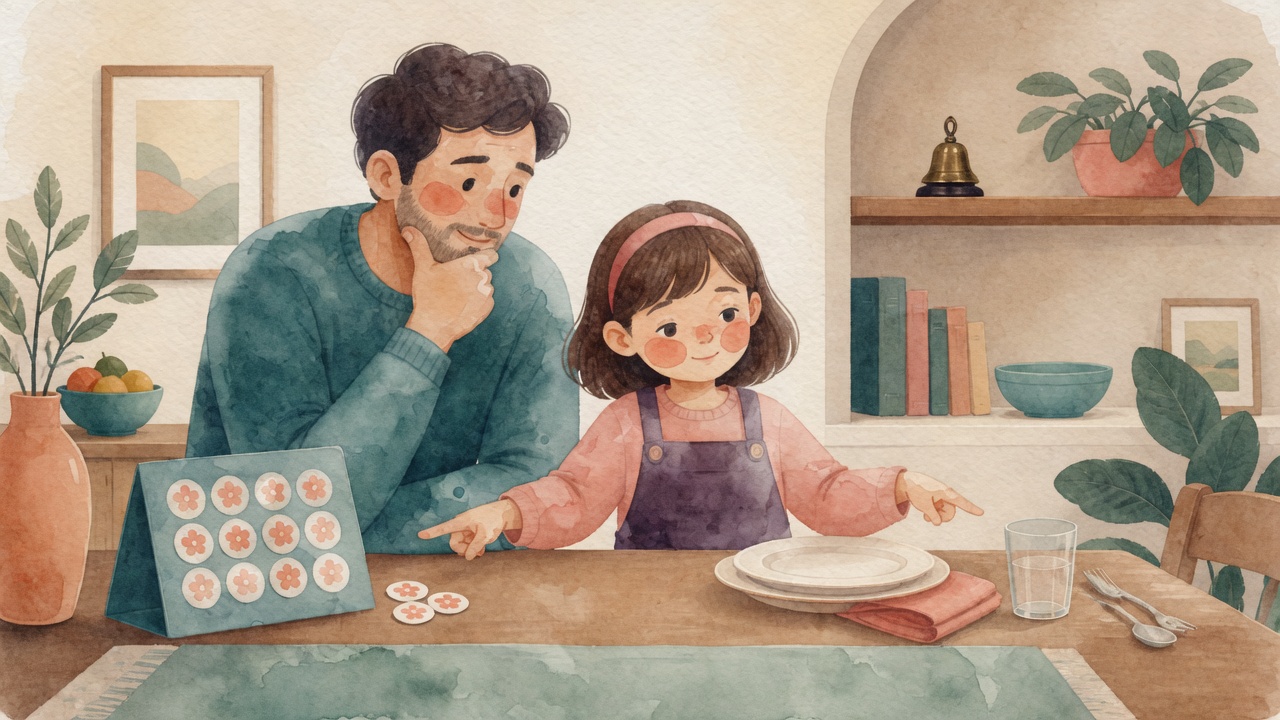
The bell and the dinner
Ivan Pavlov was a Russian researcher studying digestion. In 1904, while studying dogs, he paired a bell with food. Then his assistant noticed something odd: the dogs began salivating before the food arrived, at the sound of the bell alone.
Pavlov had shown that a biological reflex could be triggered by a sound. Schools later used the same principle through rewards, gold stars, and stickers. The star became the bell.
What this has to do with your living room
Parents are often told to praise: ‘good job’, ‘well done’, ‘you are so smart’. External rewards can work for simple habits, but children eventually build complex internal worlds. If reward is the only engine for good behaviour, they learn to perform for approval instead of thinking about why their actions matter.
Where rewards still make sense
We are not anti-reward. Habits such as brushing teeth, combing hair, and putting shoes on correctly are routine tasks. A sticker for brushing without a fight can be useful. Use rewards for habits; save your words for thinking.
What to do instead
- Name the specific action: ‘You put your plate in the sink without being asked.’
- Explain the why briefly: ‘It helps everyone when the kitchen stays clean.’
- Invite the internal result: ‘How does it feel to finish that puzzle?’
- Notice thoughtful behaviour quietly; not every good choice needs fanfare.
The thoughtful route is harder in the short term, but it pays off when the stickers run out. The answer is not ‘never praise’. It is ‘praise the right thing’.