
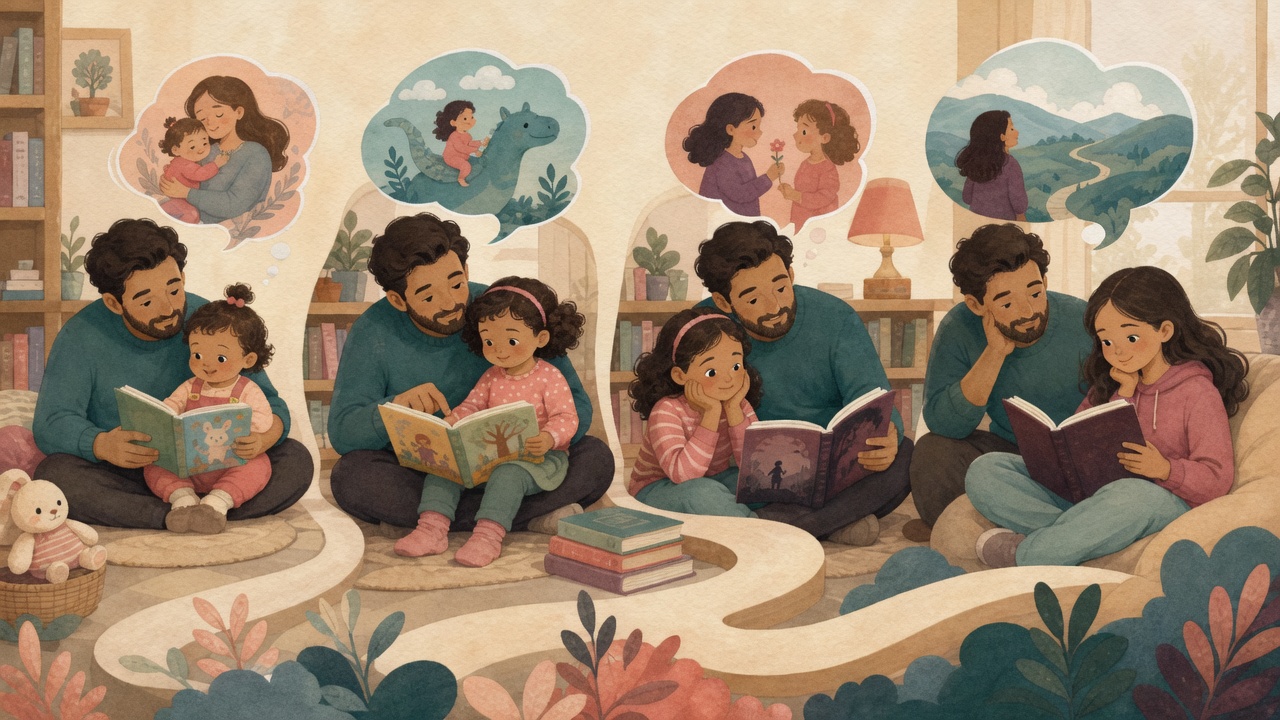
Ages 2 to 3: vocabulary and discovery
Children connect words to what they see and begin to recognize basic feelings. Stories support naming, pointing, independent learning, and an early emotional vocabulary.
Ages 4 to 5: empathy and regulation
Children begin to understand timelines, emotional causes, and consequences. Stories become a rehearsal for real life and a natural arena for co-regulation. Shared flipbooks and gentle questions turn screen time into active engagement.
Ages 6 to 7: independent learning
Longer plots become easier to follow. Children notice that a character can feel one thing but act another way. Stories prompt deeper reasoning while structured endings help children practice calm transitions.
Ages 8 to 9: complex worldviews
As social worlds expand, children encounter emotions such as embarrassment, jealousy, and pride. Stories offer a safe mirror for these experiences and help build resilience and self-regulation.
Every shared story slowly hands children tools for real life. We do more of the co-regulation now so they can process their own feelings with increasing confidence later.