
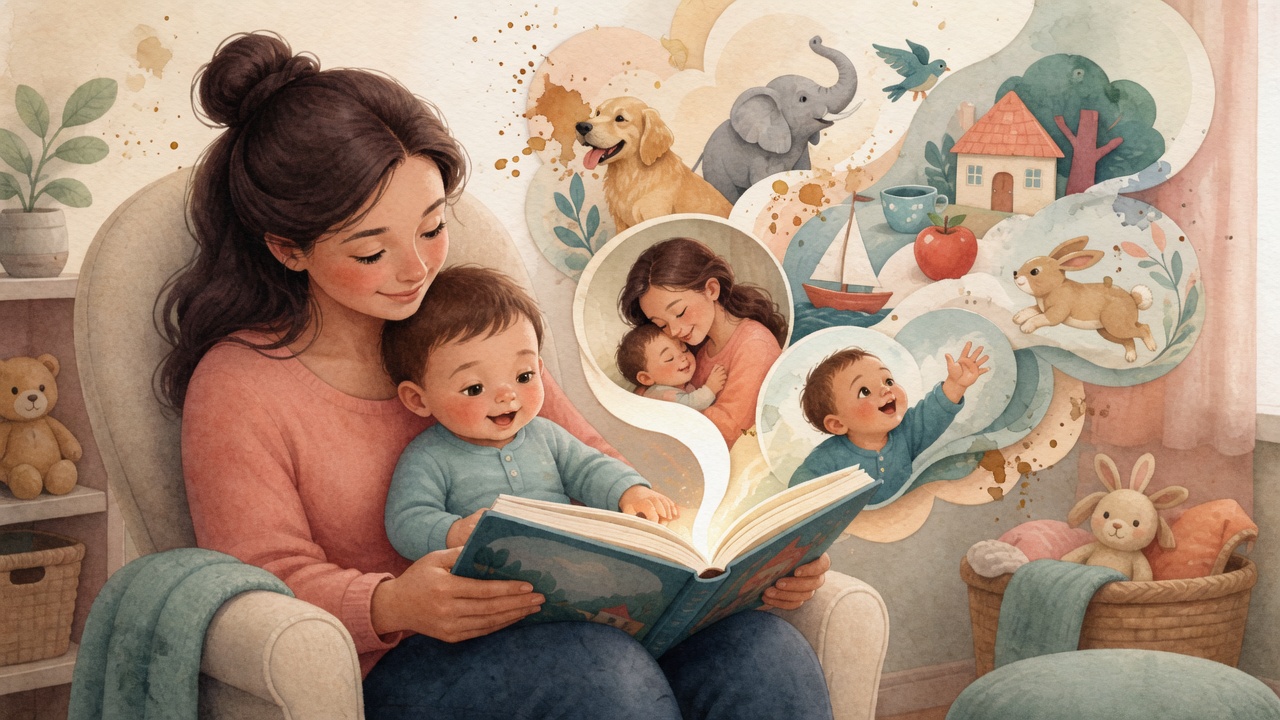
Story time is often treated as a way to get children to sleep. But stories do much more than signal bedtime. They actively help build a baby’s developing brain.
They build language architecture
Before a baby speaks, they are collecting data. Stories introduce words beyond everyday conversation - words such as ‘enormous’, ‘brave’, or ‘careful’ - giving children raw material for later language growth.
They create a safe space for big feelings
Children experience large emotions before they have the vocabulary to explain them. Stories provide a mirror at a safe distance. A pause and a question such as ‘How do you think they feel?’ gives a child words for their own inner world.
They are a masterclass in co-regulation
Sitting together with a story slows breathing, steadies tone, and signals safety. Shared attention becomes practice in connection and emotional regulation.
They teach the ability to walk away
Passive, high-stimulation content can be difficult to stop. Stories have a beginning, middle, and end. In a low-stimulation environment, reaching the ending helps children practice staying calm and transitioning away.
This is why ClockIT centres integrated storytelling: a calm, structured space where shared engagement builds skills that extend beyond the screen.