
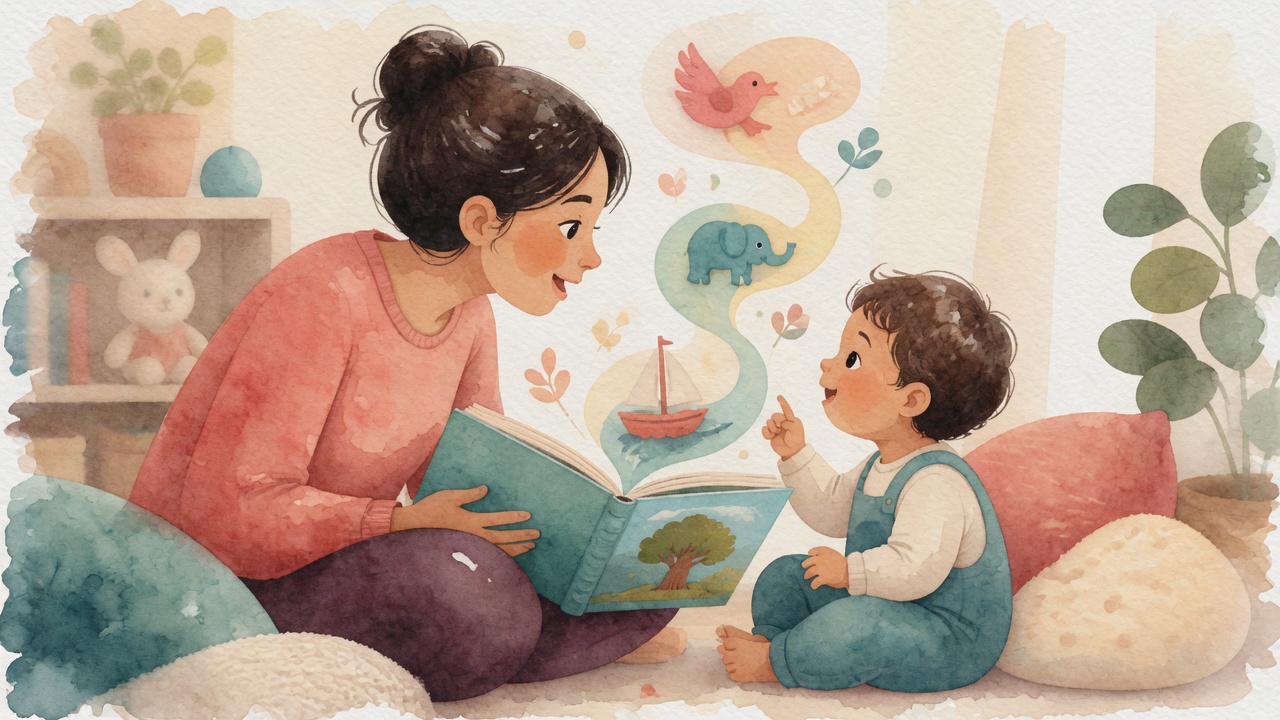
Long before children can speak, they can listen. In the first months, babies tune into the sounds, tones, and patterns around them. By around six months, familiar voices and rhythms already matter.
By twelve months, many children understand dozens of words even when they cannot say them. Between 18 and 24 months, vocabulary often accelerates and two-word combinations begin. By age three, many children understand and use more than a thousand words.
You are the language environment
The words a child hears, the warmth in the voice saying them, and the back-and-forth rhythm of conversation are the raw materials their vocabulary is built from. Not flashcards. Not passive screen time. Responsive interaction.
What you can do at every stage
- Describe your day out loud while you do ordinary tasks.
- Name emotions so children gain words for internal experiences.
- Respond to babbles as meaningful communication.
- Read stories that stretch language beyond the daily routine.
The tired-grown-up tip
You do not have to invent stories from scratch. ClockIT’s planned flipbook experience lets families revisit a story together at their own pace, using gentle prompts to ask for a child’s thoughts and questions.
Active participation helps children use what they heard, strengthening language, independent thought, and emotional processing.